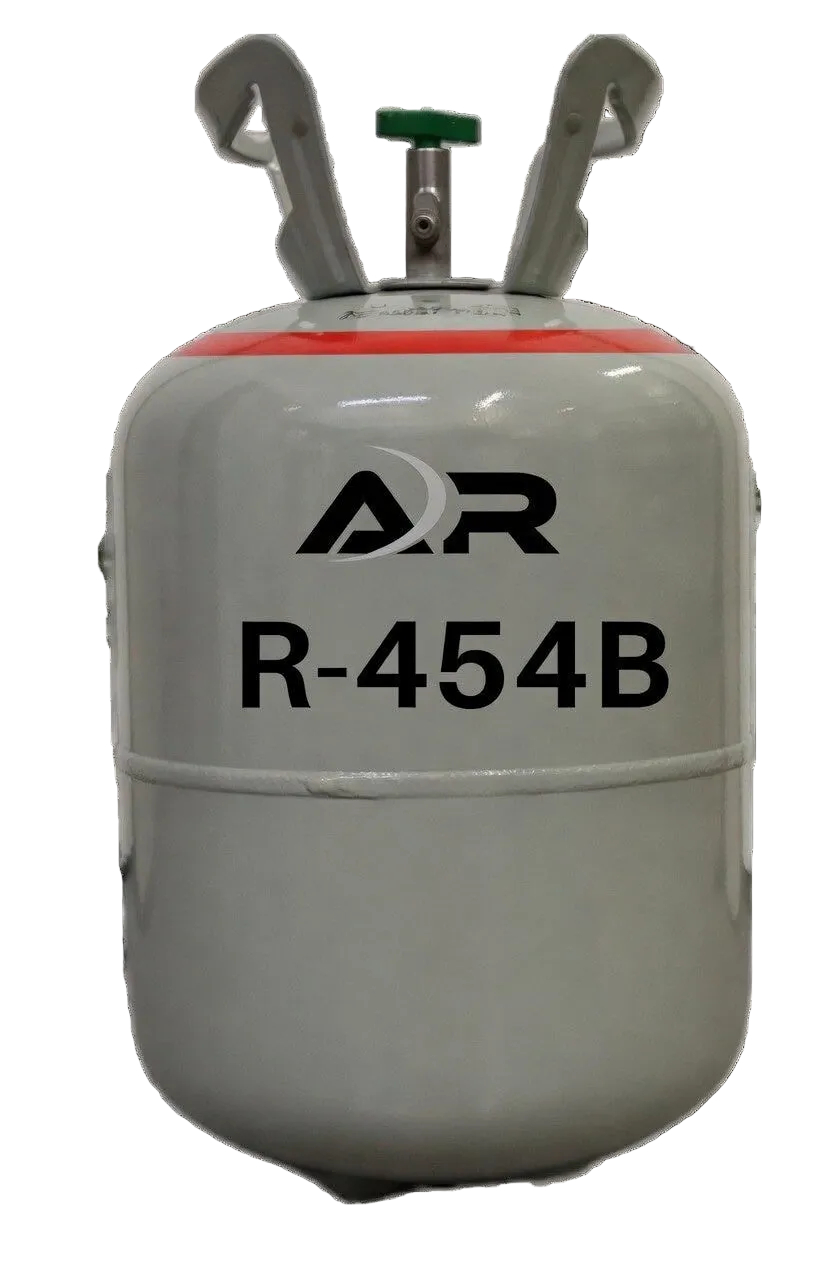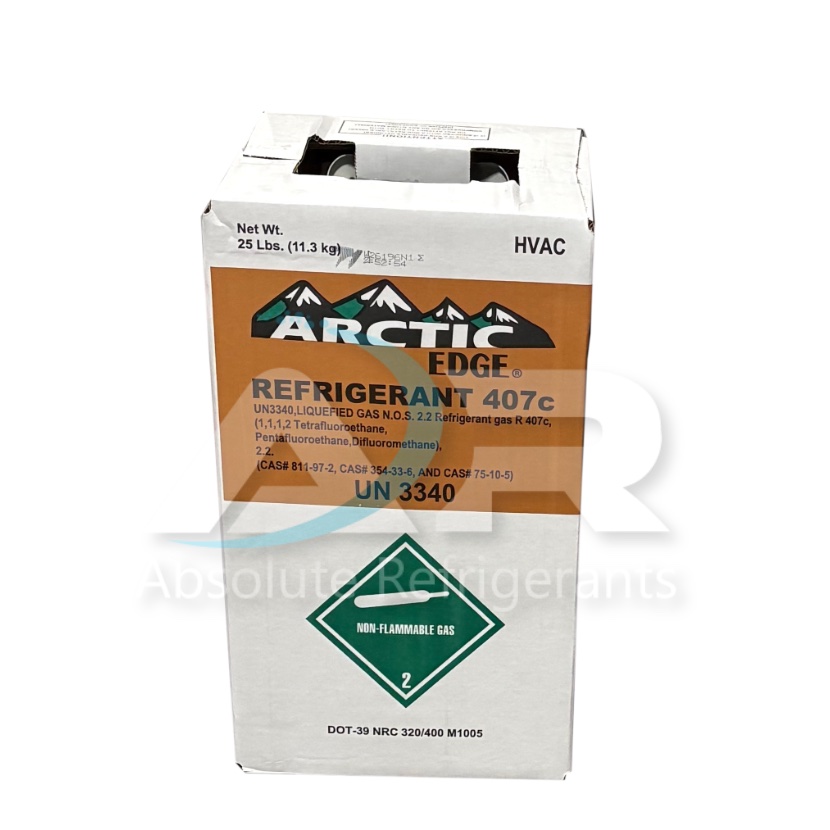

R-422B, also sold as NU-22B, is one of the retrofit refrigerants techs turn to when an R-22 air conditioner still has life left in it but R-22 is getting expensive. Its big draw is that, in most systems, it runs on the mineral oil already in the compressor. This guide covers what R-422B is, how it compares with R-22, what a retrofit involves, and how to buy it by the pallet.
Quick answer: R-422B is a blend of R-125, R-134a and a small amount of isobutane (R-600a). It’s classed A1 (lower toxicity, non-flammable), has zero ozone depletion potential and a GWP of about 2,530. It was designed to replace R-22 in existing direct-expansion air conditioning, with similar capacity in most systems and, usually, no oil change. It is not a top-off for a system still holding R-22, and the R-22 must be recovered first. Absolute Refrigerants sells factory-sealed, 100% virgin R-422B in 25 lb cylinders by the quarter, half or full pallet. See live R-422B pallet pricing
What R-422B is
- Chemistry: 55% R-125, 42% R-134a and 3% R-600a (isobutane) by weight. The two HFCs do the cooling. The small hydrocarbon share helps carry mineral oil back to the compressor.
- Names: NU-22B is the best-known trade name. EPA also lists it as ICOR XAC1, and Chemours sells it as Freon™ NU-22B™. If you’re searching for “422B freon,” this is the same refrigerant.
- Safety class: A1 under ASHRAE 34, the same class as R-22.
- Ozone depletion potential: zero. It contains no chlorine.
- GWP: about 2,530 using the IPCC AR4 values EPA lists on its SNAP pages (Chemours lists 2,290 using the newer AR5 values). Either way it’s higher than R-22, so R-422B is an ozone-safe option, not a low-GWP one.
- Glide: about 5°F (National Refrigerants). It’s a zeotropic blend, so it boils and condenses over a small temperature range.
What R-422B is used for
R-422B was built to keep existing R-22 equipment running. Chemours’ retrofit guidelines cover direct-expansion (DX) residential and commercial air conditioning, plus medium- and low-temperature refrigeration. National Refrigerants describes it as the best match at warmer evaporator temperatures, meaning air conditioning, and notes that its sister blend R-422D is the better match for medium-temperature refrigeration.
EPA’s SNAP program lists R-422B as acceptable for residential and light-commercial air conditioning and heat pumps, retrofit and new, and also for supermarket systems and remote condensing units. It is unacceptable in new cold storage warehouses as of January 1, 2023. Check the EPA SNAP list for your end use.
Where it doesn’t fit: Chemours does not recommend R-422B for centrifugal compressor systems or chillers with flooded evaporators. It is also not a refrigerant for equipment whose nameplate says R-410A, R-32 or R-454B. Those run at very different pressures.
If the system still says R-22 and hasn’t been converted, it takes R-22. See our R-22 buying guide for that.
R-422B vs R-22
| R-422B (NU-22B) | R-22 | |
|---|---|---|
| Type | HFC blend (R-125 / R-134a / R-600a) | HCFC, single component |
| Composition (by weight) | 55% R-125, 42% R-134a, 3% R-600a (isobutane) | 100% R-22 |
| Ozone depletion potential | 0 | 0.055 |
| GWP, IPCC AR4 (EPA SNAP / EPA ODS list) | 2,530 | 1,810 |
| GWP, IPCC AR5 (Chemours) | 2,290 | 1,760 |
| Safety class (ASHRAE 34) | A1 | A1 |
| Boiling point at 1 atm | −42.4°F | −41.5°F |
| Suction pressure at a 40°F evaporator | About 59 psig | About 69 psig |
| Condensing pressure at 100°F | About 198 psig | About 196 psig |
| Temperature glide | About 5°F | None |
| Oil | Existing mineral or alkylbenzene in most systems; POE can be added | Mineral or alkylbenzene |
| Capacity | Similar to R-22 in most systems; can be up to about 10% lower at low evaporator temperatures | Baseline |
| Discharge temperature | Lower than R-22 | Baseline |
Sources: EPA SNAP list; EPA ozone-depleting substances list; Chemours Freon™ MO99™ and NU-22B™ retrofit guidelines (properties, Tables 3 and 4 pressure set points); National Refrigerants, Inc. Refrigerant Reference Guide (glide, capacity notes).
What that means on the job: head pressures are almost the same as R-22, but suction pressure runs roughly 9 psi lower at a 40°F coil, so read an R-422B P-T chart instead of chasing R-22 suction numbers. R-422B also runs cooler at the compressor discharge. Chemours says it delivers similar cooling capacity and efficiency to R-22 in most systems, though National Refrigerants notes capacity can be up to about 10% lower at low evaporator temperatures.
Converting an R-22 system to R-422B
A retrofit is a job for a certified technician, and the equipment manufacturer’s instructions come first. We sell refrigerant, line set flush products and leak sealant, and we don’t do retrofits or service calls. These are the main steps in the Chemours R-22 to NU-22B retrofit guidelines:
- Record baseline readings with R-22, including pressures, temperatures, superheat and subcooling, and fix any oil return problems before the conversion.
- Recover all of the R-22 into a recovery cylinder and weigh what comes out. Venting is prohibited.
- Replace the filter-drier with the same type, rated for HFC refrigerants.
- Replace critical seals and gaskets, the ones you can’t reach without pulling the charge. Seals that have been in R-22 service can shrink and leak once an HFC blend goes in, especially on older systems. Common spots: Schrader cores, receiver gaskets, solenoid valves, ball valves and flange seals.
- Keep the existing oil in most systems. If oil return is erratic after start-up, Chemours recommends adding POE, about 20% of the total oil charge. It also recommends adding about 20% POE on systems with a liquid receiver and no oil separator, and a one-time oil change to POE for Trane 3-D and Danfoss SM scroll compressors and for screw compressor systems.
- Evacuate and leak check. Pull a deep vacuum (Chemours specifies about 500 microns) and make sure the system holds it.
- Charge by weight as a liquid. Start at about 85% of the original R-22 charge, then add in small amounts. Most systems end up at about 95% of the R-22 charge. Never charge liquid into the compressor. Flash it through your manifold or a throttling valve.
- Set superheat the same as with R-22. A properly sized TXV that worked on R-22 usually doesn’t need replacing, but it may need a small adjustment. Fixed orifices and cap tubes usually work as-is.
- Leak check again and label the system with the new refrigerant and oil.
If the line set needs cleaning during the job, for example after a compressor burnout, our AC line set flush kit and Flush-It solvent flush remove oil, sludge and residue before a component change or refrigerant retrofit. Follow the product instructions and the equipment manufacturer’s procedure.
Charging and service tips
- Use the right saturation point. Read superheat against the dew point and subcooling against the bubble point on an R-422B P-T chart.
- Expect some bubbles. Chemours notes that blends like R-422B can show some bubbles or a cloudy sight glass even when properly charged, so charge by superheat, subcooling and weight, not by a clear sight glass.
- Watch head pressure on fixed-orifice systems. If head pressure climbs well above normal R-22 levels before you reach the target charge, stop charging and look for a restriction.
- Topping off is allowed. Chemours says R-422B systems can be topped off during service without removing the whole charge. Find and fix the cause of the loss first, and never mix R-422B with R-22, R-438A or any other refrigerant.
R-422B vs other R-22 retrofit options
R-422B is one of several SNAP-listed R-22 retrofit blends. R-438A (MO99) also works with the existing oil in most systems, and Chemours covers both in the same retrofit guideline. R-422D uses the same three ingredients in a different mix and is aimed more at refrigeration. R-407C needs multiple oil changes to POE, which Chemours notes can make conversion costly on some systems. None of them is a true drop-in. For a wider overview, see R22 replacement and what you need to know.
Is R-422B being phased out?
It isn’t banned. R-422B is mostly HFCs, so it falls under the AIM Act phasedown, which cut HFC production and import allowances by 40% starting in 2024, with a deeper cut to 70% in 2029. That pressure on supply is the main reason contractors buy retrofit blends by the pallet. Existing systems that have been converted to R-422B can still be serviced with R-422B. For the rules on who can buy and handle refrigerant, see our EPA guidelines.
Buying R-422B from Absolute Refrigerants
- Sizes: 25 lb cylinders sold by the quarter pallet (10), half pallet (20) or full pallet (40).
- Price: prices change often, so see live pricing on the product page. No quote needed. The price per cylinder drops as you buy more, so a full pallet has the lowest price per cylinder.
- Product: factory-sealed, 100% virgin R-422B. Cylinder branding can vary by stock.
- Freight: pallets ship by truck freight at no charge to the lower 48, from our East or West Coast warehouse, with a signature required on delivery. BOL and SDS paperwork is included.
- California: this R-422B listing cannot ship to California addresses, because state law (SB 1206) restricts sales of bulk virgin HFCs.
- Mixed pallets: need R-422B and other refrigerants on one pallet? Use our custom pallet request.
- At checkout: upload your EPA card or e-sign a waiver confirming the refrigerant goes to a certified HVAC technician. See Can I buy refrigerant without a license?
We sell refrigerant, line set flush products and leak sealant only. We don’t sell equipment, and we don’t do service calls or leak repairs. Stocking up for a crew or a season? Our bulk refrigerant pallet buying guide covers pallet sizes, freight and receiving.
Buy R-422B 25 lb cylinders: live pallet pricing
R-422B FAQ
What is R-422B used for?
R-422B is used mainly to retrofit existing R-22 direct-expansion air conditioners and heat pumps, and some medium-temperature refrigeration systems, so the equipment can keep running without R-22. It is not used in centrifugal chillers or chillers with flooded evaporators, and it is not for R-410A, R-32 or R-454B equipment.
Is R-422B the same as NU-22B?
Yes. NU-22B is a trade name for R-422B. EPA lists it under the trade names NU-22B and ICOR XAC1, and Chemours sells it as Freon NU-22B.
Is R-422B a drop-in replacement for R-22?
Not in the no-work sense. R-422B usually runs on the existing mineral or alkylbenzene oil, but the R-22 still has to be recovered, and the manufacturer's retrofit steps call for a new filter-drier, checking critical seals, evacuating, charging as a liquid and labeling the system. Some systems need a POE oil addition or an expansion valve adjustment.
Can I mix R-422B with R-22 or top off an R-22 system with R-422B?
No. Never mix refrigerants or top off an R-22 system with R-422B. Recover the R-22 first. Once a system has been properly converted to R-422B, it can be topped off with R-422B after the leak is found and fixed. Critically charged systems should have the whole charge removed and recharged.
Does R-422B need POE oil?
In most systems, no. Chemours says R-422B works with the existing mineral or alkylbenzene oil in most systems. If oil return is poor, Chemours recommends adding POE (about 20% of the oil charge), and a one-time change to POE for some scroll compressors (Trane 3-D, Danfoss SM) and for screw compressor systems.
Do I need an EPA card to buy R-422B?
At checkout you can upload your EPA card or e-sign a waiver confirming the refrigerant goes to a certified HVAC technician.
How does R-422B ship?
R-422B is sold in 25 lb cylinders by the quarter, half or full pallet. Pallets ship by truck freight at no charge to the lower 48, with a signature required on delivery. This R-422B listing cannot ship to California.