
Different Types of Refrigerants and Which One is Right for You?
Different Types of Refrigerants and Which One is Right for You?- Absolute Refrigerants The Different Types of Refrigerants: Which One is Right for You? Want to learn more about the different types of refrigerants and which one is right for you? Refrigerants are essential components in cooling and heating systems as they absorb and release heat. They are crucial in maintaining a comfortable temperature in homes, offices, and vehicles. Over the years, various refrigerants have been used in air conditioning and refrigeration systems. However, some refrigerants have been banned due to their negative impact on the environment. This blog will discuss the different types of refrigerants and their applications. Chlorofluorocarbons (CFCs) Chlorofluorocarbons were widely used in air conditioning and refrigeration systems in the past. They are known for their low cost and high efficiency in cooling. However, CFCs have been banned due to their harmful impact on the ozone layer. When released into the atmosphere, CFCs break down the ozone layer and increase the amount of ultraviolet radiation reaching the earth's surface. This can lead to health problems and environmental issues. Hydrochlorofluorocarbons (HCFCs) HCFCs were introduced as a replacement for CFCs due to their less harmful impact on the ozone [...]

Can A Homeowner Purchase Refrigerant?
Can A Homeowner Purchase Refrigerant? - Absolute Refrigerants Can A Homeowner Purchase Refrigerant? Looking to learn more about how can a homeowner purchase refrigerant? As a homeowner, it is important to understand the laws and regulations surrounding the use of refrigerant in your home. Refrigerant is used in air conditioning and refrigeration systems to cool and dehumidify the air. In addition, refrigerants are used in household appliances such as refrigerators, air conditioners, and heat pumps to transfer heat. Q: Who can purchase refrigerant from Absolute Refrigerants? A: Any individual or business can purchase refrigerant from us. However, it's important to note that only licensed HVAC professionals are legally permitted to install or add refrigerant to an air conditioning system. What you need to do is have a licensed and certified technician install your refrigerants. Q: Do I need an HVAC license to buy refrigerant? A: No, you do not need a license to purchase refrigerant. However, the person who actually installs or adds the refrigerant to an AC system must be a licensed HVAC professional, as required by federal regulations. Q: Why are there restrictions on who can install refrigerant? A: These regulations are designed to protect environmental safety and [...]

R-422B Refrigerant (NU-22B): 2026 Guide for Techs and Contractors
R-422B, also sold as NU-22B, is one of the retrofit refrigerants techs turn to when an R-22 air conditioner still has life left in it but R-22 is getting expensive. Its big draw is that, in most systems, it runs on the mineral oil already in the compressor. This guide covers what R-422B is, how it compares with R-22, what a retrofit involves, and how to buy it by the pallet. Quick answer: R-422B is a blend of R-125, R-134a and a small amount of isobutane (R-600a). It's classed A1 (lower toxicity, non-flammable), has zero ozone depletion potential and a GWP of about 2,530. It was designed to replace R-22 in existing direct-expansion air conditioning, with similar capacity in most systems and, usually, no oil change. It is not a top-off for a system still holding R-22, and the R-22 must be recovered first. Absolute Refrigerants sells factory-sealed, 100% virgin R-422B in 25 lb cylinders by the quarter, half or full pallet. See live R-422B pallet pricing What R-422B is Chemistry: 55% R-125, 42% R-134a and 3% R-600a (isobutane) by weight. The two HFCs do the cooling. The small hydrocarbon share helps carry mineral oil back to the compressor. Names: [...]

R-410A and Why is it Such an Interesting Refrigerant Fluid
R-410A and Why is it Such an Interesting Refrigerant Fluid R-410A – Why is it such an Interesting Refrigerant Fluid Want to learn more about R-410A and Why is it Such an Interesting Refrigerant Fluid? R-410A, the hydrofluorocarbon (HFC) that is replacing R-22 in air conditioning systems worldwide, has several positive characteristics. These include, among other things: lower GWP than R-22, higher volumetric and mass flow properties, less flammable properties, high stability, and reliability characteristics, and 0 ODP. These principles apply to a very broad range of uses which in turn enables the system designer to choose an R-410A air-cooled unit for very high-capacity applications. Also known as an Eco-friendly refrigerant fluid. The refrigerant is the common name for a blend of two refrigerants, HFC-32 and HFC-125. It is often used as a replacement for R-22 in medium to large residential, commercial and industrial refrigeration and air conditioning systems. To expand, the R-410A is considered an eco-friendly refrigerant because it has zero ozone depletion potential (ODP). In other words, it does not contribute to ozone depletion, which helps protect the environment from harmful UV radiation. Moreover, R410A has a lower Global Warming Potential – a lower GWP means that the [...]
R-404A Refrigerant: 2026 Buying Guide for Techs and Contractors
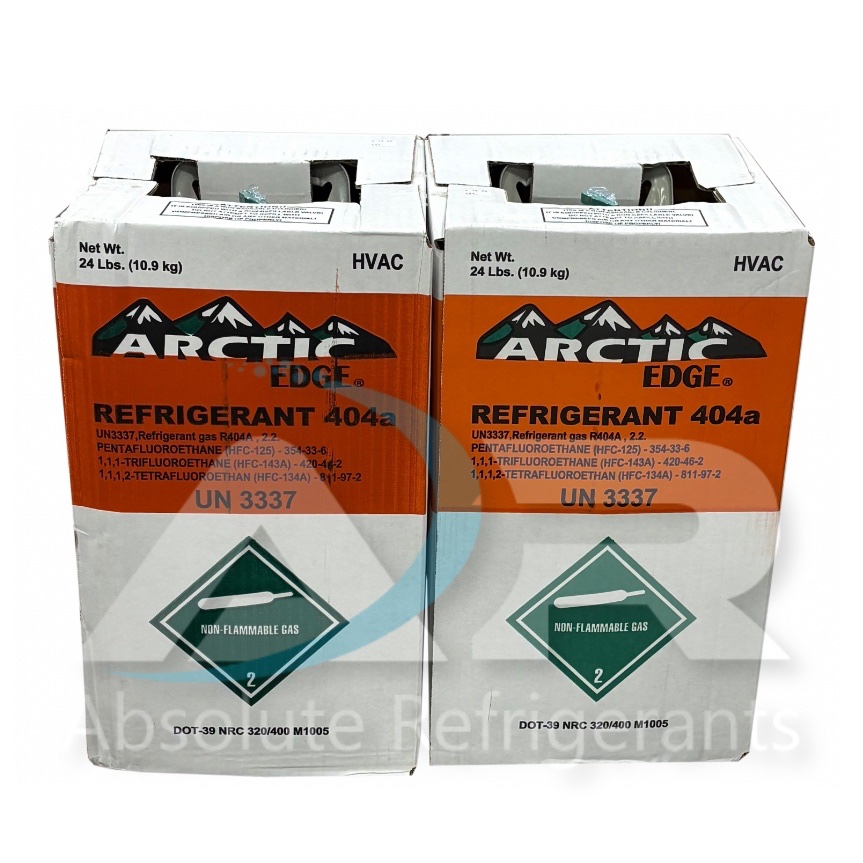
R-404A has been a go-to refrigerant for commercial freezers, display cases and ice machines since the 1990s. Now the questions are about the rules: Is it banned? Virgin or reclaimed? What goes in the system when R-404A gets too expensive? This guide answers those and shows how to buy R-404A without waiting on a quote. Quick answer: R-404A is a blend of R-125, R-143a and R-134a used in low- and medium-temperature commercial refrigeration. It's classed A1 (lower toxicity, nonflammable), has zero ozone depletion potential and a GWP of about 3,920. It is not banned, and existing R-404A systems can keep being serviced with it, but EPA rules keep it out of many kinds of new equipment, and supply is shrinking under the AIM Act phasedown. We sell 100% virgin R-404A in 2 lb cylinders and in 24 lb cylinders by the quarter, half or full pallet, plus reclaimed R-404A by the pallet. See all R-404A and live pricing What R-404A is Chemistry: 44% R-125, 52% R-143a and 4% R-134a by weight, all HFCs. It contains no chlorine, so its ozone depletion potential is zero. Safety class: A1 under ASHRAE 34, meaning lower toxicity and no flame propagation. GWP: about 3,920 [...]

R-410A Pros and Cons & Comparisons to Other Refrigerants
R-410A Pros and Cons & Comparisons to Other Refrigerants Want to learn more about the R-410A Pros and Cons & Comparisons to Other Refrigerants? Reliability, efficiency, and safety are the three most important traits of any refrigeration system. R-410A is a very popular refrigerant, and rightfully so. It's energy-efficient and has superior leak protection properties that make it stands out compared to other refrigerants. While there are many benefits to R-410A as a refrigerant, you may have some questions about whether or not it's the right fit for your HVAC system. Choosing the right refrigerant can make all the difference in your business. Let's dive into R-410A’s pros, cons, and comparisons to other refrigerants. What Is R-410A? R-410A, also known as HFC-410A, is a type of refrigerant used in commercial refrigeration and air conditioning systems. It is used in residential and commercial applications that include heating and cooling as well as dehumidification. Unlike older refrigerants like R12 or R22, R410A does not contain chlorine or bromine (which makes it non-flammable). Because of this, it can be used safely indoors without causing any damage to equipment or building materials if there is a leak. It has been developed to replace R-22 [...]

Can You Put R-410A in an R-22 System? What Happens and What to Do
It's one of the most common questions on an R-22 service call: the system is low, R-22 costs more than R-410A, and there's a jug of R-410A on the truck. Can you use it? This guide gives the straight answer, shows why with manufacturer pressure data, and explains what to do if R-410A has already gone into an R-22 system. Quick answer: No. You can't put R-410A in an R-22 system, and you can't mix the two. Chemours says R-410A "cannot be used for retrofit" and is only for new equipment designed for it. It runs about 60% to 75% above R-22's pressure, needs POE oil instead of the mineral oil in R-22 systems, and would overload a compressor built for R-22. An R-22 system needs R-22 or an EPA-listed retrofit blend. R-22 is still legal to buy and use, and we sell reclaimed R-22 with live pricing. Why R-410A doesn't work in an R-22 system The two refrigerants are close in name only. R-22 systems were designed around R-22's pressures, its oil and its flow. R-410A changes all three. 1. Much higher pressure At the same saturation temperature, R-410A runs roughly 60% to 75% higher pressure than R-22. Chemours [...]
What is 407C Refrigerant Used for?
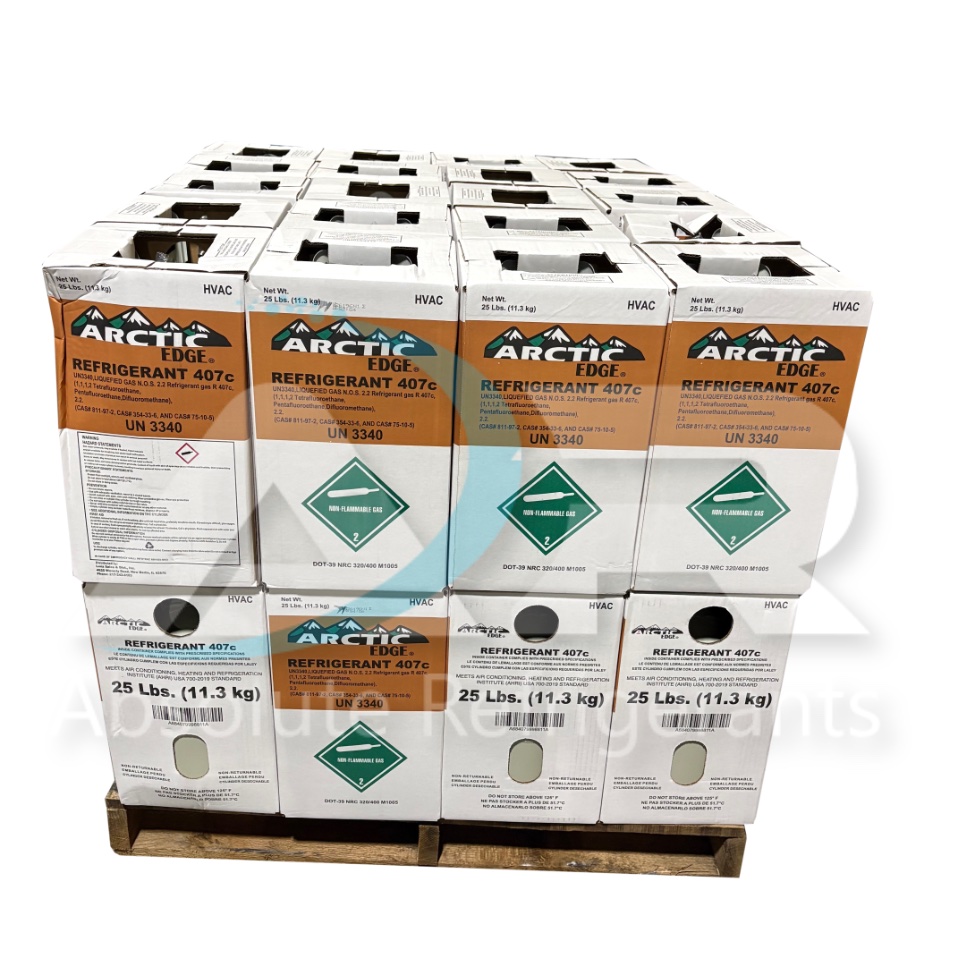
What is 407C Refrigerant Used for? Want to learn more about what is 407C Refrigerant Used for? 407C is a more efficient type of refrigerant that has been slowly becoming the standard in commercial HVAC systems. The introduction of this type of refrigerant was in 1997. If you've ever wondered what it's used for, how it works, or if it's good for your business, then you're going to want to read this article. R-407C is not a top-off for R-22. R-407C is an A1 blend used in air conditioners and heat pumps built for R-407C. It is not a top-off for an R-22 system. The nameplate has to call for it. R-407C is non-flammable and has no ozone depletion potential. It is for equipment rated for R-407C. It does not get added to a system that is still charged with R-22. It is used in air conditioning and refrigeration applications. 407C is a hydrofluorocarbon (HFC) refrigerant that belongs to the HFC family of chemicals. It is a non-flammable, low GWP, and high-pressure refrigerant that is used in air conditioning and refrigeration applications. This refrigerant has an extremely high boiling point of -43.6°C, which means it can efficiently operate in cold [...]

R22 vs R-410A Refrigerant
Updated October 2026: R-22 is still legal to buy and use to service existing systems; new production and import ended in the U.S. on January 1, 2020. Need R-22 now? Shop R-22 sizes. See our R-22 Refrigerant Buying Guide for current rules, sizes, prices and how ordering works. R22 vs. R-410A Refrigerant - Absolute Refrigerants Want to learn more about R22 vs R-410A Refrigerant? When it comes to replacement options for R22 refrigerant, we often get asked what the difference is between R22 and R410A. This is not a simple or easy question to answer. This is because both refrigerants have cons as well as pros. Below is an R-22 vs. R-410A refrigerant comparison to help you make the best decision when replacing your old system. Whether you're an owner or a technician, it's important to understand the difference between the two and how you can use the best refrigerant for a given application. R22 Refrigerant Usage R22 is a non-flammable, colorless refrigerant with a faint odor. It was commonly used in United States residential and commercial air conditioning and refrigeration applications. It is also used in small commercial air conditioning systems and for low-temperature heat pump systems. New air [...]

R-22 Replacement Refrigerants Compared: 2026 Guide for Techs
Every R-22 service call eventually raises the question of what to put in the system instead. The answer depends on what the system cools, what oil is in the compressor and what EPA allows for that equipment. This guide compares the R-22 replacements contractors actually use, explains what "drop-in" really means, and covers the option many skip: staying on R-22. Quick answer: No refrigerant is a true drop-in for R-22. For DX air conditioners still on mineral oil, R-422B, R-438A (MO99) and R-421A are the usual retrofit choices because their makers say most systems can keep the existing oil. R-422D and R-438A are common in medium- and low-temperature refrigeration. R-407C performs close to R-22 but needs POE oil. R-410A is not an option for an R-22 system. And R-22 itself is still legal to buy and use. We sell reclaimed R-22 and seven retrofit blends with live pricing. First: you may not need a replacement U.S. production and import of R-22 ended on January 1, 2020, but EPA says you may keep using R-22 in an existing system for as long as necessary, and it doesn't require anyone to convert. Supply now comes from reclaimed R-22 and pre-2020 stock. EPA's [...]